Last updated: October 12, 2026
Ignition interlock device insurance is a misleading phrase, because the interlock is a legal requirement, not an insurance product. Insurers don’t sell it, and we found no verified evidence that installing one changes your premium. What it does change is your budget and your timeline.
This guide separates what the sources verify from what they only imply. It covers how interlocks relate to your SR22 and how many states require them. It also covers what they cost, and how four states handle them.
What an Ignition Interlock Device Does
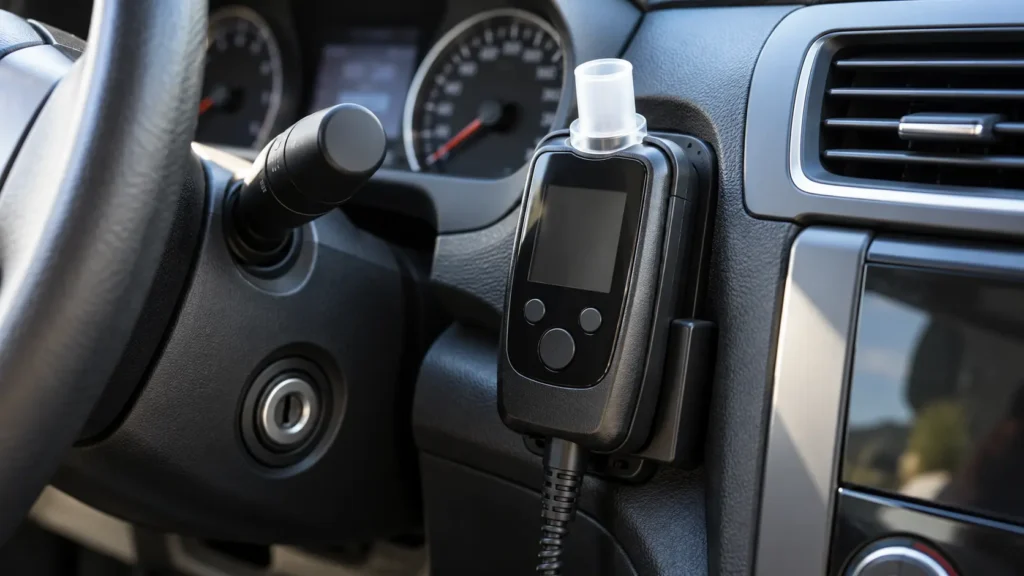
NHTSA describes an alcohol ignition interlock as a device that stops a vehicle from starting unless the driver provides a breath sample below a preset level, usually 0.02. It’s installed after the vehicle is sold, and NHTSA says offenders typically pay for installing, calibrating, monitoring, and removing it.
MADD (page modified June 24, 2026) compares the device to a cell phone in size, wired into the ignition system. The court or the state decides whether you need one, not your insurer.
Ignition Interlock Device Insurance: Does It Change Your Rate?
We found no insurer or department of insurance statement that an interlock triggers a surcharge or a discount. The sources that address it lean one way. LifeSafer, a provider (April 25, 2025), says installing a device usually doesn’t lower your premium, because insurers base rates on your driving record. Bluefire Insurance, an agency (updated October 13, 2025), says few insurers offer discounts for interlock use.
Progressive’s DUI page (updated March 19, 2026) doesn’t mention interlocks at all. We also found no source showing an interlock question on an insurance quote form. So treat ignition interlock device insurance as two separate lines: the device bill and the premium. The conviction, not the device, drives the premium. Our guide to how much insurance goes up after a DUI covers that price.
Interlock vs SR22: Two Separate Requirements
An interlock and an SR22 do different jobs. The interlock controls whether you can drive. The SR22 proves you carry liability coverage. LifeSafer says installing an interlock doesn’t replace the need for SR-22 or FR-44 insurance, and that failing to comply with the interlock could affect your SR-22 status.
Official pages show the split. Texas DPS lists the interlock and the SR-22 as separate items on its DWI page. California’s DMV says an SR-22 is required to get the interlock-restricted license, so the two stack. Low Cost Ignition Interlock (February 16, 2026) says completing one doesn’t usually erase the other.
The periods differ too. In Texas, DPS says the SR-22 runs two years from conviction. In Arizona, the MVD says the interlock lasts at least one year and the SR-22 three years. Low Cost Ignition Interlock gives Colorado as an example of an eight-month interlock with an SR-22 of up to three years. See our guide on how to get rid of SR22 for the end-date steps.
| State | Interlock period | SR-22 period | Source |
|---|---|---|---|
| Texas | Set by the court | Two years from the date of conviction | Texas DPS |
| Arizona | At least one year | Three years | Arizona MVD |
| Colorado (example) | Eight months | Up to three years | Low Cost Ignition Interlock |
How Many States Require an Interlock
The count depends on the definition. MADD (June 24, 2026) says 34 states plus DC require devices for all convicted drunk drivers, and NHTSA gives the same 34 plus DC on an undated page. NCSL (updated March 14, 2024) says 31 states plus DC. GHSA (updated October 2025) says 27 states make interlocks mandatory or highly incentivized for all convicted offenders.
So a fair statement is about 30 or more states, depending on the source and the definition. An older IIHS count of 28 states dates from 2018, so we don’t use it. Check your own state’s rule, since a first offense often falls under the all-offender law.
What an Interlock Costs
MADD says devices cost about $70 to $150 to install and about $60 to $80 a month for monitoring and calibration. LifeSafer says installation runs $70 to $150, leases run $50 to $120 a month, and calibration every 30 to 90 days costs around $25.
| Source | Installation | Monthly cost | Calibration |
|---|---|---|---|
| MADD | About $70 to $150 | About $60 to $80 for monitoring and calibration | Included in the monthly range |
| LifeSafer (provider) | $70 to $150 | $50 to $120 lease | About $25, every 30 to 90 days |
| Smart Start, Texas page (pricing as of October 1, 2024) | Labor from $150 | Lease from $89.99 | From $25, plus enrollment and removal fees |
Smart Start’s Texas page lists labor from $150, monthly lease from $89.99, and calibration from $25, plus enrollment and removal fees, with pricing as of October 1, 2024. At those starting prices, 12 months costs about $1,230 before calibration, enrollment, and removal. On MADD’s ranges, 12 months costs $790 to $1,110.
Arizona adds a state fee of $20 for each device installed or transferred, and the MVD doesn’t regulate fees above that. Providers set their own prices, so get at least two quotes before you commit. Then add the device to your first-year budget: roughly $790 to $1,230, depending on the provider and the state, before any fee for missed appointments. Because that cost sits outside your insurance bill, it’s easy to forget when you compare quotes.
Ignition Interlock Device Insurance and Your SR22 Timeline
The two requirements rarely end together. Take the Arizona illustration from our Arizona SR22 guide: the interlock ends around month 15, but the SR22 runs to month 39. That leaves 24 months of filing after the device comes out.
So plan the budget in two stages. First comes the period with both the device bill and the insurance premium. Then comes a longer period with the premium alone. Nothing in the sources we read suggests the premium drops on the day the device comes out.
Ignition Interlock Device Insurance Myths
- Myth: an interlock earns an insurance discount. The sources we read say discounts are rare and installation usually doesn’t lower the premium.
- Myth: an interlock replaces the SR22. It doesn’t, and official pages in Texas and California treat them as separate requirements.
- Myth: your insurer pays for it. NHTSA says offenders typically pay for installing, calibrating, monitoring, and removing the device.
- Myth: interlocks apply only to repeat offenders. About 30 or more states apply them to all convicted offenders, depending on the definition.
Interlock Rules in Four States
- Texas: under Code of Criminal Procedure article 42A.408, a court must require an interlock as a condition of community supervision for a BAC of 0.15 or higher, an enhanced offense, a prior intoxication conviction within ten years, or a driver under 21. It must stay for at least half of the supervision period. See our Texas DWI insurance guide.
- Ohio: section 4510.022 lets first-time offenders petition for unlimited driving privileges with a certified interlock. Section 4510.13, in the version effective April 9, 2025, adds a 45-day wait and a required interlock when there’s a prior conviction within ten years. Summaries of House Bill 37 disagree on first-offense details, so confirm with the court. See our Ohio OVI insurance guide.
- California: the statewide pilot runs from January 1, 2019 through December 31, 2032. All repeat and all injury-involved DUI offenders must install a device, and first-time offenders without injury may be ordered up to six months. An SR-22 is required for the restricted license.
- Arizona: the MVD says the average requirement is 12 months, and at least one year from the date you’re eligible to reinstate. We couldn’t verify the repeat-offense periods. See our Arizona SR22 guide.
Ignition Interlock Device Insurance Checklist
- Ask the court or DMV in writing whether an interlock applies to your case, and for how long.
- Get two provider quotes, and ask for installation, monthly, calibration, and removal fees.
- Tell your insurer you have an interlock, and ask whether it changes the price. Expect that it won’t.
- Keep the SR22 active for its own period, since finishing the interlock doesn’t end it.
- Compare insurers at every renewal. Our cheapest SR22 insurance companies comparison shows who appears in 2026 rankings.
Budget for the interlock as a fixed cost, and shop the insurance separately. The device bill won’t shrink because of the policy, and the policy won’t shrink because of the device. The best result comes from doing both well.
Figures were checked on September 29, 2026 against the sources named above. Interlock laws change often, so confirm the current rule in your state.
The team at High Risk Auto Guide isn’t a licensed insurance agency. The information in this article is educational and based on official, verified sources as of the date noted. Confirm the details that apply to your specific case with your state’s DMV/BMV or with your own insurance company.